The Role of Technical Vocational livelihood in poverty reduction
DOI:
https://doi.org/10.64591/s7et8b36Keywords:
Poverty reduction, Technical Vocational Livelihood, Skills developmentAbstract
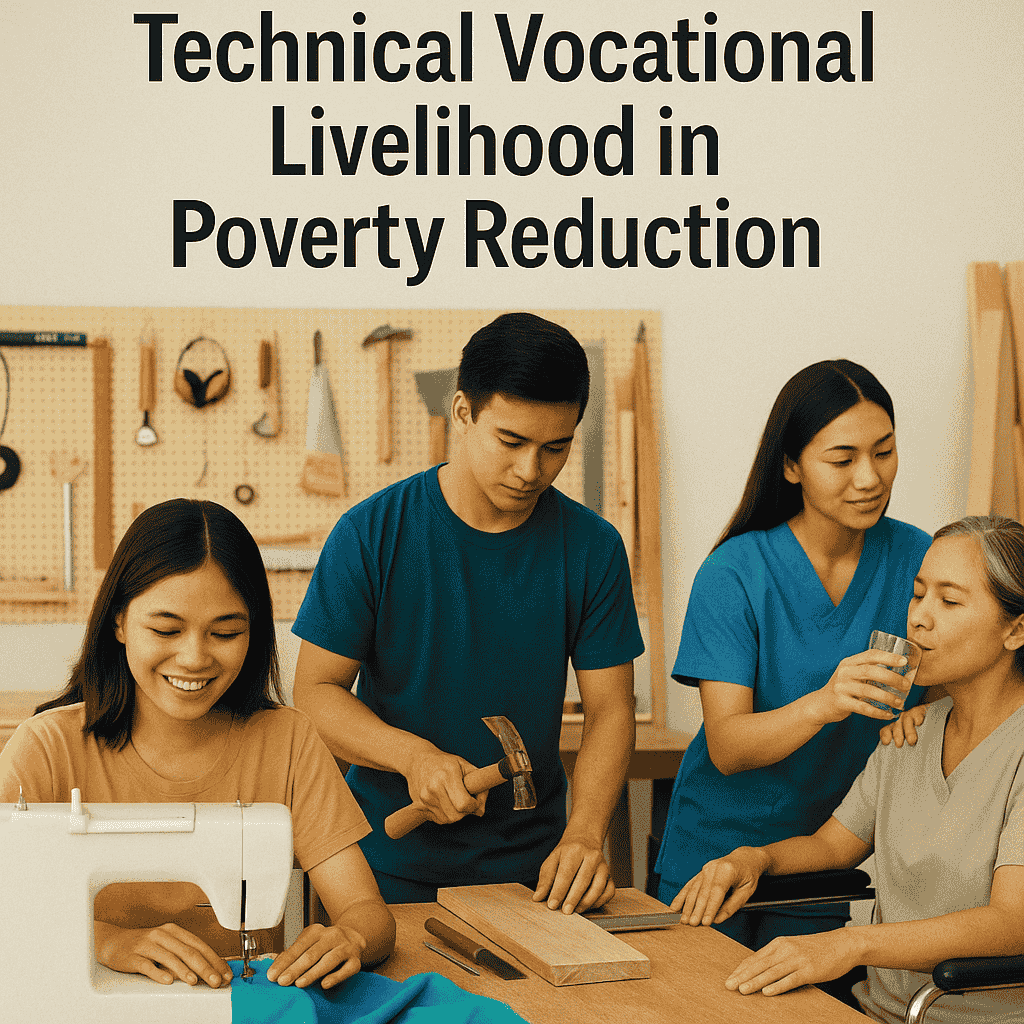
This essay explores the significant role of Technical Vocational Livelihood (TVL) programs in reducing poverty by equipping individuals with employable skills in fields such as caregiving, IT, cookery, and electronics. TVL offers a faster, practical path to employment—especially for low-income families—while also strengthening local economies and supporting sustainable development. With its capacity to transform lives, TVL proves to be an inclusive and impactful strategy for empowering communities and fostering hope in the fight against poverty.
References
Asian Development Bank. (2020). Technical and Vocational Education and Training in the Philippines in the Age of Industry 4.0.
Geraldizo, D., & Dabasol, J. (2021). Assessment of the senior high school technical-vocational livelihood track. International Journal of Management and Commerce Innovations, 9(2), 395–406.
Mcm, C., & Mcm, C. (2024). Building careers with Technical Vocational Livelihood programs. Mapúa Malayan Colleges Mindanao.
https://mcm.edu.ph/technical-vocational-livelihood-programs
Pervez, S. (2016). Role of education in poverty elimination in Pakistan with special reference to South Punjab. International Journal of Innovation and Applied Studies, 17(1), 70.
Technical Education and Skills Development Authority (TESDA). (2021). Annual Performance Report.
Downloads
Published
Issue
Section
License
Copyright (c) 2025 STOCK KNOWLEDGE GAZETTE

This work is licensed under a Creative Commons Attribution 4.0 International License.